

Sustainable Agriculture
Key Challenges in Modern Agriculture
Soil & Agronomic Issues

Rising soil salinity and alkalinity have become major constraints on seeding establishment and early-stage crop development.
Increasing soil compaction is restricting root growth and nutrient uptake, weakening overall crop performance.
Accumulating pesticide residues are leading to higher seedling mortality and production risks.
Escalating continuous-cropping diseases are undermining yield stability and production sustainability.
Economic Pressure

Mounting on-farm challenges are eroding agricultural profitability and farmer confidence.
The urgent need for crop structure adjustment is accompanied by growing uncertainty over income security.
Productivity Impact

Stagnant yields combined with declining product quality are placing sustained pressure on regional agricultural development.
Key Challenges in Modern Agriculture
| Process Pathway | Mechanism Description |
|---|---|
| Irrigation-induced salinization and alkalization | Accelerates secondary salinization and aggravates soil degradation |
| Chemical acid-alkali neutralization | Rapid exothermic reaction resulting in temporary chemical salt formation |
| Beneficial microorganisms | Microbial metabolites provide sustained regulatory effects through cellular absorption, biotransformation and detoxification |
| Outcome | Enhancement of root establishment and early-stage crop resilience |
Salinization & Alkalization
1
| Process Pathway | Mechanism Description |
|---|---|
| Organic amendments | Disordered field management, high labor input and low mechanization levels, accompanied by potential contamination risks including heavy metals, veterinary residues and pathogens |
| Microbial metabolites | Contribute to soil loosening and the formation of soil aggregates |
| Beneficial soil microorganisms | Enhanced microbial activity increases soil porosity and aeration |
| Outcome | Improvement of root establishment capacity and soil structural resilience |
2
Soil Compaction
| Process Pathway | Mechanism Description |
|---|---|
| Surface runoff and leaching | Runoff leads to water contamination, while pesticide residues retained in soil result in persistent soil pollution |
| Natural attenuation | Degraded ecological conditions significantly limit the natural degradation capacity of pesticide residues |
| Beneficial microorganisms | Microbial metabolites interact with pesticide residues, enabling microbial biodegradation and detoxification |
| Outcome | Improvement of root establishment capacity and early-stage crop recovery |
Pesticide Phytotoxicity
3
| Process Pathway | Mechanism Description |
|---|---|
| Excessive pesticide dependence | Long-term reliance on pesticides fails to address the root causes of disease, leading to passive management, declining crop quality and severe soil contamination |
| Beneficial microorganisms | Microbial metabolites suppress pathogen invasion of the root system, while rhizosphere colonization by beneficial microorganisms enhances root health |
| Outcome | Enhancement of root establishment capacity and disease resilience under continuous cropping systems |
Continuous Cropping Obstacles
4
Key Components of High-Efficiency Nutrient Utilization
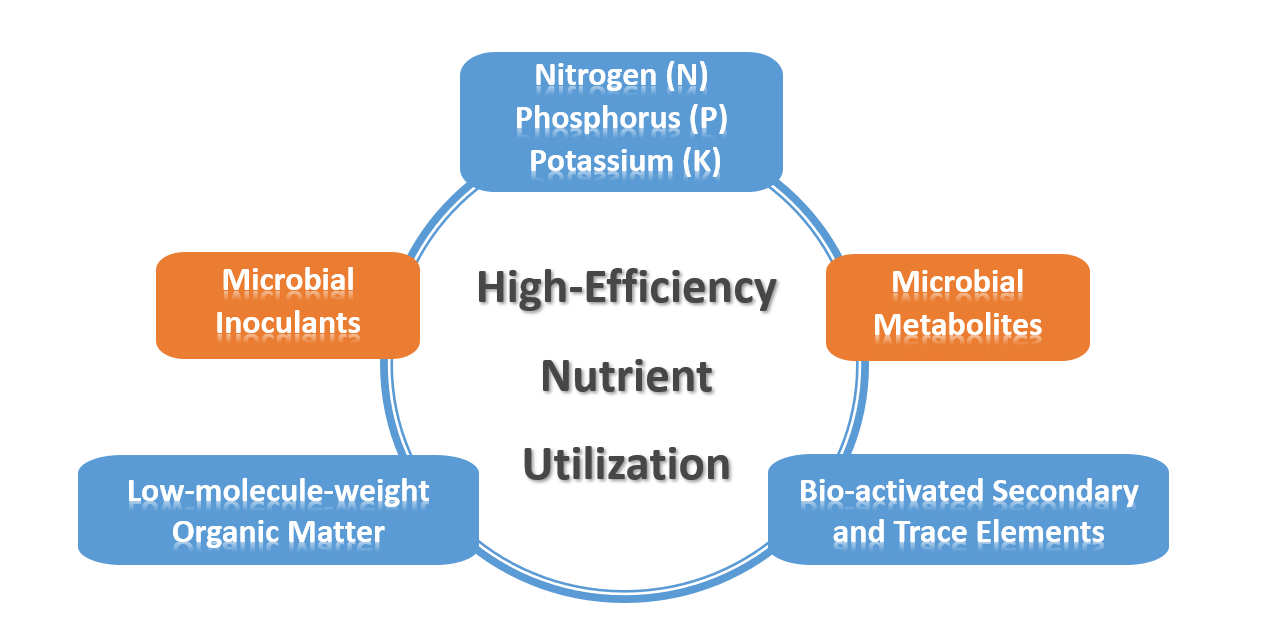
Core Issue in N-P-K Utilization
The fundamental constraint is the lack of effective biological and biochemical facilitators required to enhance nutrient availability and uptake efficiency. Establishing a scientifically balanced system of microbial and biochemical enhancers for nitrogen, phosphorus and potassium represents the most effective pathway to improving fertilizer use efficiency and reducing chemical fertilizer inputs.
Prevention First: The Key to Reducing Pesticide Use
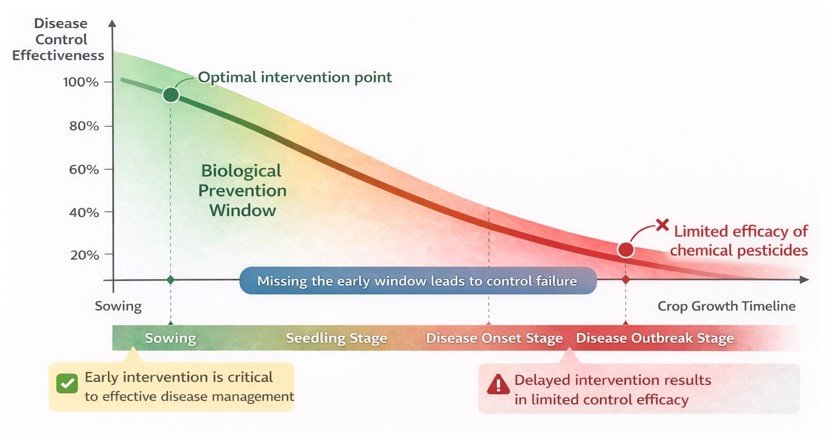
Key Causes of Continuous Cropping Obstacles

Nutrient Deficiency
Disruption of Soil Microbial Competitive Balance
Crop Autotoxicity
Crop Disease Prevention and Control
Current Situation
Current disease prevention systems rely heavily on agronomic practices and chemical interventions; however, traditional agronomic measures are constrained by multiple factors, resulting in high implementation costs and operational challenges.
Chemical Control Limitations
Chemical pesticides currently play a dominant role in disease control, which has led to widespread issues including pesticide residues, environmental contamination, the emergence of pathogen resistance, and declining crop quality.
Biological Control
Biological control offers a targeted and environmentally sustainable approach, representing a strategic pathway for improving disease prevention effectiveness.
Mechanisms of Microbial Disease Control
Key Functional Microbial Groups
-
•Bacillus strains exhibit strong antagonistic activity against soil-borne pathogens, demonstrate high survivability in soil environments, possess strong rhizosphere colonization capacity, and proliferate rapidly. They are capable of inducing systemic resistance in plants while promoting root development and overall plant growth. Representative species include Bacillus subtilis, Bacillus amyloliquefaciens, and Bacillus laterosporus, all of which are endospore-forming bacteria with high environmental adaptability.
-
•Species including Trichoderma harzianum, T. viride, T. koningii, T. hamatum, and T. longibrachiatum exhibit significant biocontrol potential against soil-borne diseases. When applied in combination with Bacillus species, they demonstrate superior control performance for root-related diseases compared with conventional chemical fungicides, while contributing to crop yield stability.
-
Approximately 70% of antimicrobial compounds derived from microbial metabolism originate from actinomycetes. Among them, the genus Streptomyces is particularly notable for its outstanding disease suppression capability and its important role in sustainable plant disease management.
Microbial agents suppress plant diseases through six core mechanisms:
Resource competition
01
outcompete pathogens for nutrients and colonization sites
Antimicrobial activity
02
secrete inhibitory metabolites
directly parasitize pathogenic fungi
03
Mycoparasitism
Plant growth promotion
04
enhance plant vigor and stress tolerance
Induced resistance
05
activate plant immune responses
degrade and disrupt pathogen cells
06
Microbial lysis
Representative Functional Strains
Bacillus spp.
Inhibit root rot pathogens by occupying rhizosphere niches and limiting pathogen establishment.
Trichoderma spp.
Parasitize pathogenic hyphae, causing hyphal deformation, lysis, and reduced spore production.
Actinomycetes
Produce antimicrobial metabolites that suppress soil-borne pathogens.
Integrated Disease Management Concept
Pathogen control and physiological disease regulation are both critical.
In many production systems, improving plant physiological resilience is more effective than relying on pathogen suppression alone.
Diverse Strain Composition
Effective microbial disease control requires a diversified consortium of beneficial microorganisms, typically including Bacillus species, Trichoderma fungi, and actinomycetes, to support complementary functions and system stability.
Adequate Microbial Population Density
1.A sufficiently high population of beneficial microbes is necessary to establish competitive advantages in the rhizosphere, thereby suppressing the establishment and proliferation of soil-borne pathogens.
Endospore-Forming Bacteria as a Key Component
Endospore-forming bacteria (e.g., Bacillus spp.) provide higher environmental tolerance and persistence, contributing to stable field performance under variable soil conditions.
Diverse Microbial Metabolites
Organic acids can stimulate root development and improve nutrient uptake efficiency.
Extracellular polysaccharides help enhance soil aggregate structure, alleviate soil compaction, and improve soil aeration and permeability.
Enzymes and antimicrobial peptides inhibit pathogen growth and contribute to disease suppression.
Systematic Management of Continuous Cropping Obstacles
Continuous cropping obstacles result from multiple interacting factors. Implementing microbial solutions throughout the cultivation cycle supports sustained disease prevention and contributes to long-term soil health improvement.
Functions of Microbial Inoculants
Technical Specifications Viable cell count ≥ 2.0 × 10¹¹ CFU/g
-
The active microorganisms in the inoculant secrete gibberellins, cytokinins, auxins, and other bioactive substances that stimulate, regulate, and promote crop growth and development, thereby increasing yield. Photosynthetic efficiency is enhanced, with the light saturation point increasing from 1,800 μmol to 2,200 μmol.
-
Microbial inoculants significantly improve the quality of agricultural products. Crops harvested after application show markedly higher contents of proteins, sugars, vitamins, and amino acids. Grains and fruits become plump and smooth, and vegetables and fruits exhibit brighter color and improved appearance. Nitrate accumulation is reduced, improving food safety.
-
Microorganisms secrete antibiotic substances and various active enzymes that inhibit or kill pathogenic microorganisms, reducing disease incidence and enhancing crop stress tolerance. They improve drought resistance, cold tolerance, lodging resistance, disease resistance, and tolerance to saline-alkali conditions, and can effectively prevent physiological disorders in crops.
-
Microorganisms decompose soil organic matter, producing humic acids that combine with nitrogen to form ammonium humate, thereby reducing nitrogen loss. Potassium-solubilizing and phosphate-solubilizing microbes convert fixed soil potassium and phosphorus into readily available forms, increasing nutrient utilization, lowering production costs, and reducing resource waste.
-
Microorganisms secrete extracellular polysaccharides that act as binding agents for soil aggregates, thereby strengthening soil structure, loosening compacted soil, and improving aeration, water retention, and nutrient-holding capacity. They increase soil organic matter, activate latent soil nutrients, and enhance overall nutrient availability.
-
Microbial inoculants effectively prevent and suppress diseases associated with continuous monocropping. They also significantly inhibit crop disorders caused by abnormal temperature, nutrient deficiency, and reduced plant immunity.
After soil application, beneficial microorganisms establish dominant populations in the rhizosphere, improve the root micro-ecological environment, and block pathogen invasion. Targeted microbial metabolites further inhibit the growth and reproduction of pathogenic fungi and nematodes.
-
Plant hormones secreted by beneficial microorganisms stimulate vigorous root development and vegetative growth, significantly enhancing the plant’s capacity for water and nutrient absorption and markedly improving fertilizer use efficiency.
-
Through their biological activity and metabolites, microorganisms effectively reduce soil salinity and alkalinity, and can immobilize toxic heavy metals. The cadmium immobilization efficiency can reach up to 92.3%.
-
Microorganisms are capable of decomposing pesticide residues and degrading high-molecular-weight compounds in soil, thereby effectively eliminating pesticide-related soil contamination.
Formulation Principles
At Biotic Green, formulation begins with function.
Each product is developed within a scientific framework that prioritizes strain specificity, stability, and measurable performance across real-world biological systems.
Collaboration & Distribution Opportunities
Biotic Green works with agricultural producers, research institutions, and health-focused partners to develop and deploy microbial solutions across diverse markets.
We welcome strategic collaborations, distribution partnerships, and technology integration initiatives.