
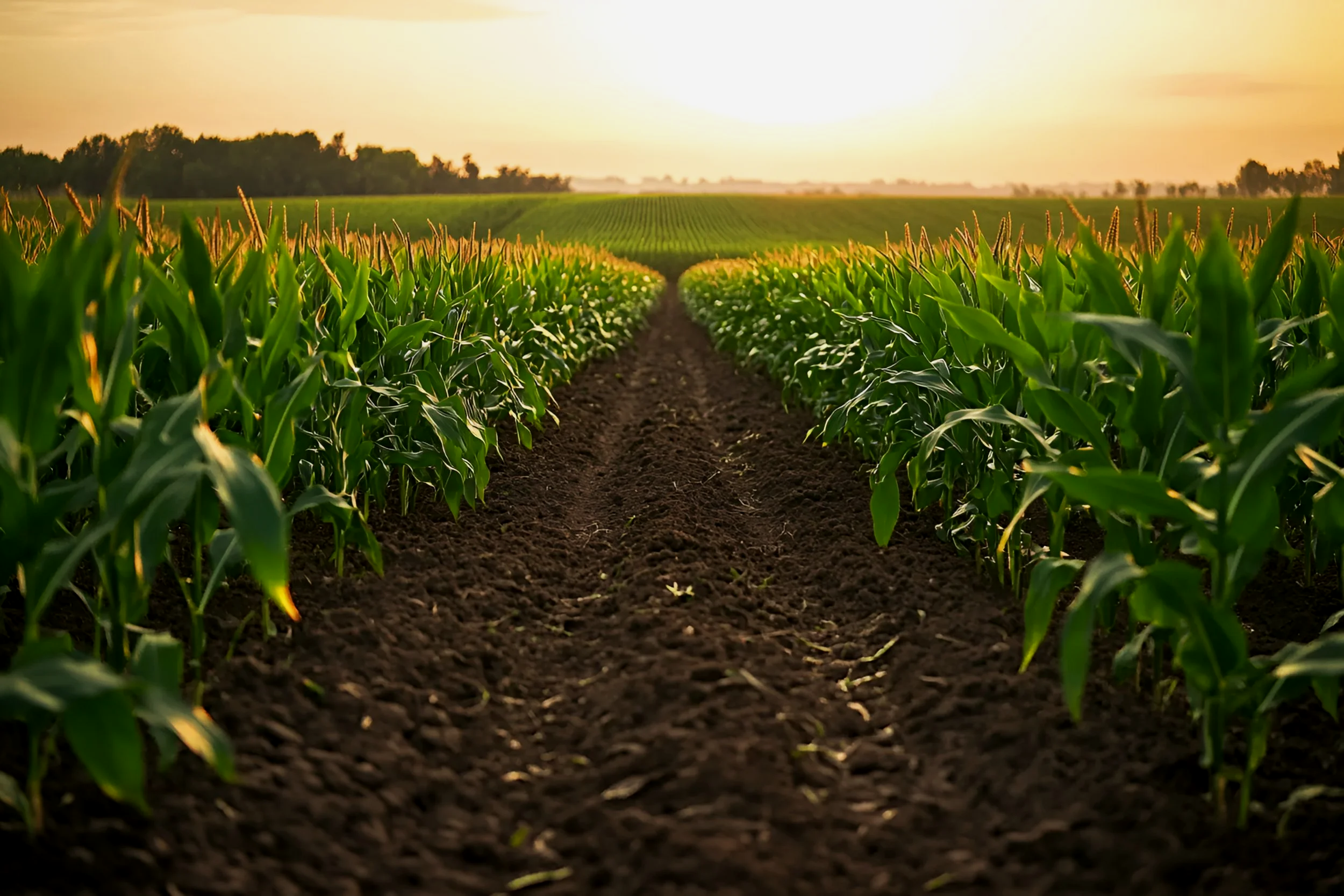
Agricultural Challenges
Key Challenges in Modern Agriculture
Soil & Agronomic Issues
Rising soil salinity and alkalinity have become major constraints on seeding establishment and early-stage crop development.
Increasing soil compaction is restricting root growth and nutrient uptake, weakening overall crop performance.
Accumulating pesticide residues are leading to higher seedling mortality and production risks.
Escalating continuous-cropping diseases are undermining yield stability and production sustainability.
Economic Pressure
Mounting on-farm challenges are eroding agricultural profitability and farmer confidence.
The urgent need for crop structure adjustment is accompanied by growing uncertainty over income security.
Productivity Impact
Stagnant yields combined with declining product quality are placing sustained pressure on regional agricultural development.
Four Core Agricultural Challenges and Microbial Solutions
| Process Pathway | Mechanism |
|---|---|
| Irrigation-induced salinization and alkalization | Accelerates secondary salinization and aggravates soil degradation |
| Chemical acid-alkali neutralization | Rapid exothermic reaction resulting in temporary chemical salt formation |
| Beneficial microorganisms | Microbial metabolites provide sustained regulatory effects through cellular absorption, biotransformation and detoxification. |
| Outcome | Enhancement of root establishment and early-stage crop resilience |
| Process Pathway | Mechanism |
|---|---|
| Surface runoff and leaching | Runoff leads to water contamination, while pesticide residues retained in soil result in persistent soil pollution |
| Natural attenuation | Degraded ecological conditions significantly limit the natural degradation capacity of pesticide residues |
| Beneficial soil microorganisms | Microbial metabolites interact with pesticide residues, enabling microbial biodegradation and detoxification |
| Outcome | Improvement of root establishment capacity and early-stage crop recovery |
| Process Pathway | Mechanism |
|---|---|
| Organic amendments | Disordered field management, high labor input and low mechanization levels, accompanied by potential contamination risks including heavy metals, veterinary residues and pathogens |
| Microbial metabolites | Contribute to soil loosening and the formation of soil aggregates |
| Beneficial soil microorganisms | Enhanced microbial activity increases soil porosity and aeration |
| Outcome | Improvement of root establishment capacity and soil structural resilience |
| Process Pathway | Mechanism |
|---|---|
| Excessive pesticide dependence | Long-term reliance on pesticides fails to address the root causes of disease, leading to passive management, declining crop quality and severe soil contamination |
| Beneficial soil microorganisms | Microbial metabolites suppress pathogen invasion of the root system, while rhizosphere colonization by beneficial microorganisms enhances root health |
| Outcome | Enhancement of root establishment capacity and disease resilience under continuous cropping systems |
Collaboration & Distribution Opportunities
Biotic Green works with agricultural producers, research institutions, and health-focused partners to develop and deploy microbial solutions across diverse markets.
We welcome strategic collaborations, distribution partnerships, and technology integration initiatives.